 Print Page
- About BNMS
- HIstory of BNMS
- BNMS People
- BNMS Policies
- BNMS Achievements
- Governance
- Awards & Prizes
- Donate/Support Us
- About Nuclear Medicine
- FAQs
- Membership
- Events
- News
- Resources
- Radionuclide Supply
- UKRG
- MRT Consortium

| Careers |
|
Careers
INSPIRE by EANMPresents a dedicated platform designed to introduce young people who are not yet involved in Nuclear Medicine to the field and its opportunities. On the new website, you can discover:
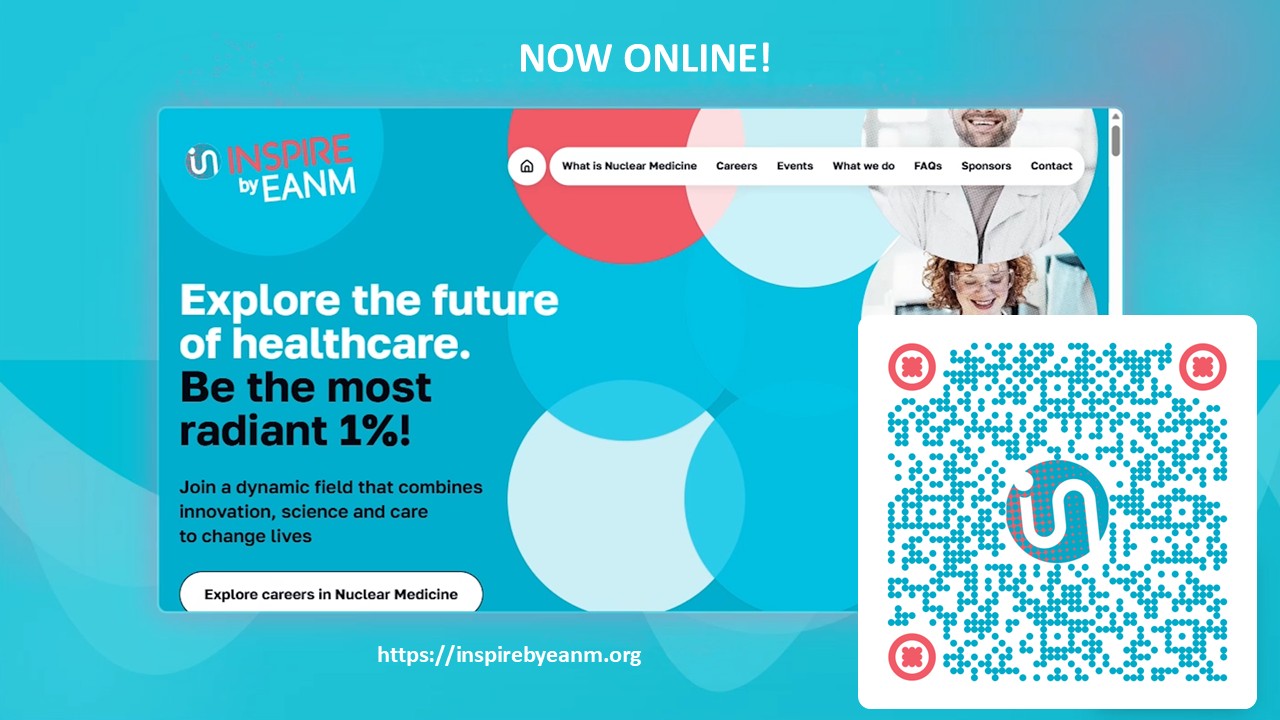
Is a career in Nuclear Medicine for you?
A Career in Healthcare Science
What is it like to be a Clinical Scientist?Sandwell and West Birmingham Hospitals NHS Trust have produced a series of healthcare science films which they are sending to local schools to help students with their career choices.
Career in Nuclear Medicine posterThinking of a career in nuclear medicine?John Frank explains why Nuclear Medicine has become a major dynamic imaging speciality Considerations for future demand for trained specialists in nuclear medicine - A document prepared by the Centre for Workforce Intelligence, the national authority on workforce planning and development for health and social care. Nuclear Medicine RCP Specialty of the MonthNuclear medicine is a vibrant specialty at the forefront of medical science. It utilises tiny amounts of radioactive substances (tracers) to visualise physiological processes in the body. As physiological changes tend to precede anatomical changes, nuclear medicine imaging techniques can often diagnose and determine response to treatments before other imaging modalities. This facilitates optimal patient care with quicker diagnoses and fine tuning treatment. Via molecular targeting, nuclear medicine physicians can also treat patients with an ever-expanding range of conditions (including thyrotoxicosis, arthritic joints, thyroid cancer, neuroendocrine tumours and metastases). Read More
FAQ for overseas enquiries - Technologists and RadiographersThis document provides some useful guidance around working in the United Kingdom if you are considering travelling from overseas. View full article
Careers OverviewNuclear Medicine Career Information Nuclear Medicine encompasses a range of 'craft groups' including Physicians, Radiologists, Clinical Scientists, Radiopharmaceutical Scientists, Radiographers, Medical Physics Technicians and Nurses. Whilst there is no one model for Nuclear Medicine service delivery and hence it is not possible to give definitive information on roles and responsibilities, the following documents have been assembled with the view to answering frequent questions regarding career opportunities and educational and training requirements. For clinicians, there is a useful overview article on Nuclear Medicine as a Career published in the British Medical Journal. Specialist Registrar Posts in Nuclear Medicine The National Specialty Training Committee prospectus outlines the organisation of the Nuclear medicine Training Programme in all the Regions where training opportunities are provided. Copies of the prospectus can be obtained by contacting:
Ms Julia Cookhorn Medical Personnel & Training Officer South Thames Office of PGMDE TPMDE 33 Millman Street London WC1N 3EJ
Tel: 0171 692 3125 Fax: 0171 692 3103 www.bmjcareers.comThinking of a career as a nuclear medicine technologist?
Introduction If you have a keen interest in a people orientated career incorporating the health sciences and computer technology why not consider a career as a Nuclear Medicine Technologist. Read More
What does a Nuclear Medicine Technologist do?Over the last five years the role of the nuclear medicine technologist has become more complex. This has primarily been due to the increased demand for more complex nuclear medicine procedures, such as myocardial perfusion scans and positron emission tomography (PET). It is now fairly routine for technologists to perform their own injections, and perform advanced computer processing, along with imaging the patient and checking their own films. Read More
What does a Nuclear Medicine Physicist do?The physicist is a key member of the nuclear medicine team and has specific responsibilities for the scientific and technical aspects of the service. The professional role of a nuclear medicine physicist will fall within some or all of seven main areas. Read MoreWhat does a Nuclear Cardiologist do?The main role of the Nuclear Cardiologist is in common with all medical specialties, the assessment of the patient but also whether the appropriate nuclear medicine technique can add to the patient's clinical management. The most commonly used technique is SPECT. PET is available in very limited centers but it is slowly coming to mainstream with newer applications. The commonest techniques used for diagnosis, include myocardial perfusion scintigraphy (MPS) and radionuclide ventriculography (RNV). The new applications include cardiac neuronal imaging with mIBG and cardiac inflammation imaging with FDG. Very limited centers in UK have ability to perform PET myocardial perfusion imaging. Read MoreWhat does a Radiopharmaceutical Scientist do?
The main responsibility of the Radiopharmaceutical Scientist in nuclear medicine is the preparation of radiopharmaceuticals to ensure their safety and efficacy. Many radiopharmaceuticals are administered by intravenous injection, so that preparation needs to be performed under aseptic conditions. All radiopharmaceuticals are, by definition, radioactive, so that radiation protection forms an integral part of the job. Read MoreWhat does the Radionuclide Radiologist do?In common with all medical specialities, the Radionuclide Radiologist is responsible for the assessment of the patient. He or she may also suggest and perform appropriate nuclear medicine techniques in order to facilitate the patient's clinical management. Radionuclide radiology is now a recognised sub-specialty within clinical radiology. It comprises those diagnostic-imaging techniques, which use radiolabelled tracers for diagnosis. The consultant radiologist with special expertise in this field will take responsibility for the organisation and delivery of a radionuclide diagnostic imaging often within a department of clinical radiology Read More |
08/06/2026 » 12/06/2026
King’s College London – Radiopharmacy course
01/07/2026
Lutetium 177 Study Day
 BNMS YouTube Channel #BNMS2026 https://www.bnms.org.uk/news/721432/NEW-Feature-Member.htm
 RCR NM Travelling Professor https://www.bnms.org.uk/news/728160/BNMS-Feature-Member.htm